
Seeed XIAO ESP32S3 Wio-SX1262 Kit
Thumb-sized LoRa kit pairing the XIAO ESP32S3 with a Wio-SX1262 module over a B2B connector, a starter node for Meshtastic and LoRa/LoRaWAN projects.

Seeed XIAO ESP32S3 Wio-SX1262 Kit Pinout
14 pins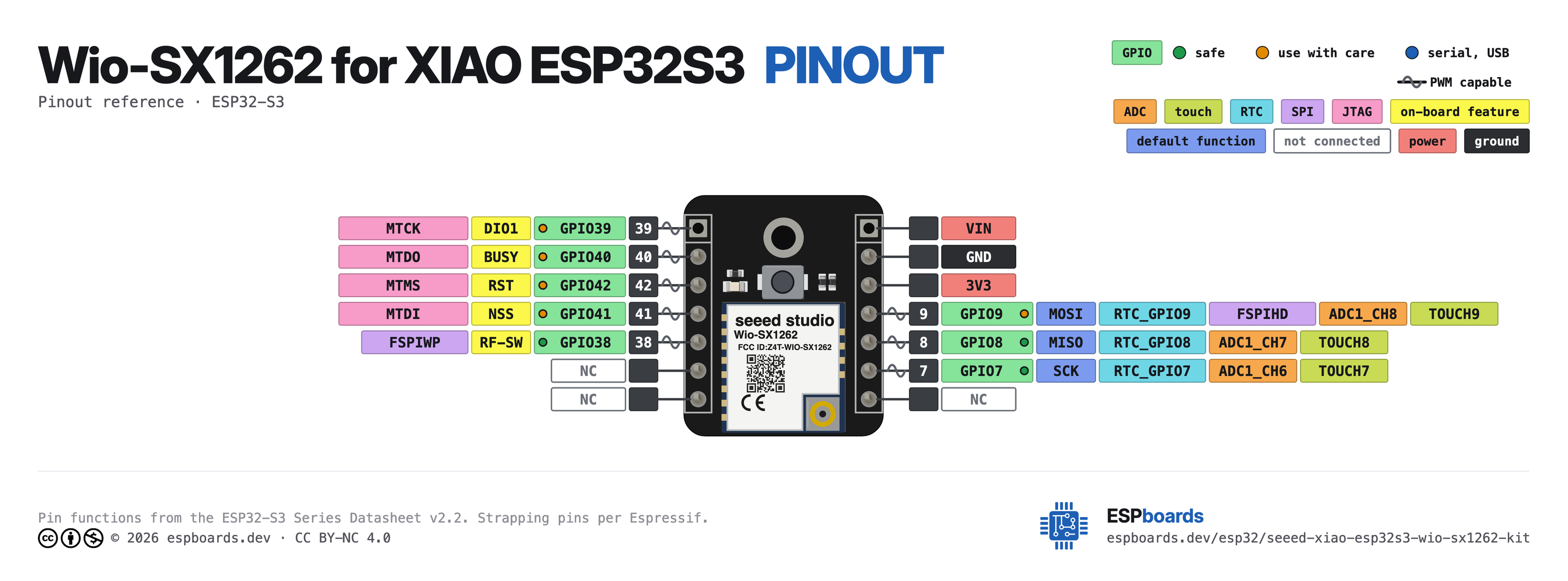
| Pin | GPIO | Labels | Status | Capabilities | Notes |
|---|---|---|---|---|---|
| 1 | 1 | D0A0GPIO1TOUCH1 | safe | adc · touch · pwm | ADC1, touch |
| 2 | 2 | D1A1GPIO2TOUCH2 | safe | adc · touch · pwm | ADC1, touch |
| 3 | 3 | D2A2GPIO3TOUCH3 | strapping | adc · touch · pwm | ADC1, touch |
| 4 | 4 | D3A3GPIO4TOUCH4 | safe | adc · touch · pwm | ADC1, touch |
| 5 | 5 | D4A4SDAGPIO5TOUCH5 | safe | adc · touch · pwm · i2c | Default I2C SDA |
| 6 | 6 | D5A5SCLGPIO6TOUCH6 | safe | adc · touch · pwm · i2c | Default I2C SCL |
| 7 | 43 | D6TXGPIO43 | uart | uart · pwm | UART0 TX |
| 8 | - | 5VVBUS | power | - | 5V from USB-C |
| 9 | - | GND | ground | - | Ground |
| 10 | - | 3V33.3V-OUT | power | - | 3.3V regulator output |
| 11 | 9 | D10A10MOSIGPIO9TOUCH9 | strapping | adc · touch · pwm · spi | SPI MOSI, used by the SX1262 LoRa radio |
| 12 | 8 | D9A9MISOGPIO8TOUCH8 | safe | adc · touch · pwm · spi | SPI MISO, used by the SX1262 LoRa radio |
| 13 | 7 | D8A8SCKGPIO7TOUCH7 | safe | adc · touch · pwm · spi | SPI SCK, used by the SX1262 LoRa radio |
| 14 | 44 | D7RXGPIO44 | uart | uart · pwm | UART0 RX |
Start with these
5 pins with no boot or system involvementFreely assignable - no strapping, flash, USB or JTAG duties. Ideal first picks for buttons, sensors and LEDs.
Fine - with a little care
6 pins · 4 things to knowD2GPIO3 Bootstrapping pin (controls JTAG signal source) Strapping
Sampled at reset to select JTAG interface (USB Serial/JTAG controller vs. external pins). Improper use can disable external JTAG or alter debug interface.
D6GPIO43 UART0 transmit pin (U0TXD), default serial console TX UART
Used for bootloader output and UART console logs. If repurposed, you will lose the default serial output (and programming via UART0).
D10GPIO9D9GPIO8D8GPIO7 Used by the SX1262 LoRa radio (SPI) onboard hardware
Wired to the SX1262 LoRa radio (SPI) on this board. The pin is yours if you give that up, but nothing else can share it.
- D10SPI MOSI, used by the SX1262 LoRa radio
- D9SPI MISO, used by the SX1262 LoRa radio
- D8SPI SCK, used by the SX1262 LoRa radio
D7GPIO44 UART0 receive pin (U0RXD), default serial console RX UART
Used for bootloader input (download mode via serial). If repurposed, you cannot use the default UART0 download mode for programming the chip.
The Seeed XIAO ESP32S3 Wio-SX1262 Kit pinout brings out 14 pins - 11 usable GPIO alongside the 5V, GND and 3V3 power rails.
For peripherals, I²C is mapped to SDA on GPIO5 and SCL on GPIO6; the SPI bus (MOSI, MISO, SCK) is broken out in full; TX/RX on GPIO43 and GPIO44 cover serial logging and flashing.
On the analog side there are 9 ADC-capable pins for sensors and battery monitoring, PWM on every GPIO and 9 capacitive-touch inputs.
If you want zero surprises, D0, D1, D3, D4 and 1 more are free of any such role - the safest first picks. 6 of the exposed pins carry boot-time or system duties on the ESP32-S3 (D2, D6, D10 and 3 more).
Getting started
flash your first firmware in ~2 minutesBoard: ESP32S3 Dev Module USB CDC On Boot: Enabled Flash Size: 8MB (64Mb) PSRAM: QSPI PSRAM Partition Scheme: 8M with spiffs (3MB APP/1.5MB SPIFFS) Upload Speed: 921600
// blink the onboard user LED
void setup() {
  pinMode(21, OUTPUT);
}
void loop() {
  digitalWrite(21, HIGH); delay(500);
  digitalWrite(21, LOW);  delay(500);
}[env:seeed-xiao-esp32s3-wio-sx1262-kit]
platform = espressif32
board = seeed_xiao_esp32s3
framework = arduino
monitor_speed = 115200
upload_speed = 921600
board_build.arduino.memory_type = qio_qspi
build_flags = -DBOARD_HAS_PSRAMseeed_xiao_esp32s3 - or type it after board =.esp32:
board: seeed_xiao_esp32s3
variant: esp32s3
framework:
type: esp-idf
psram:
mode: quad
speed: 80MHz
# blink - GPIO21
output:
- platform: gpio
pin: 21
id: led_out
light:
- platform: binary
name: "LED"
output: led_outseeed_xiao_esp32s3 (same ids as PlatformIO).esptool.py --chip esp32s3 --port /dev/ttyACM0 \
--baud 921600 write_flash 0x0 firmware.bin--port = your /dev/tty* (macOS/Linux) or COMx (Windows).Good to know
board-specific quirks worth 60 secondsThe SX1262 shares the XIAO's SPI pins: D8 (GPIO7, SCK), D9 (GPIO8, MISO) and D10 (GPIO9, MOSI) carry the LoRa bus, so do not use them for other things while the radio is active. The radio's other lines (NSS GPIO41, RESET GPIO42, DIO1 GPIO39, BUSY GPIO40, RF switch GPIO38) go through the B2B connector on the underside and are not on the edge pins.
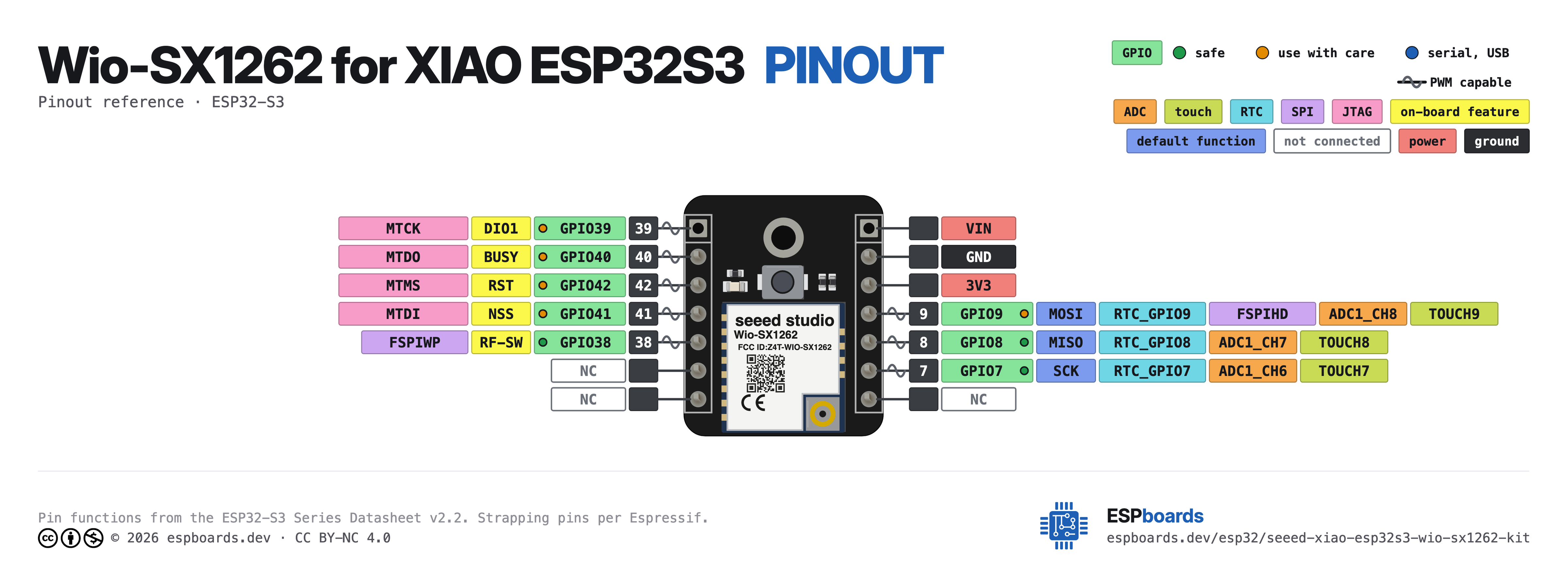
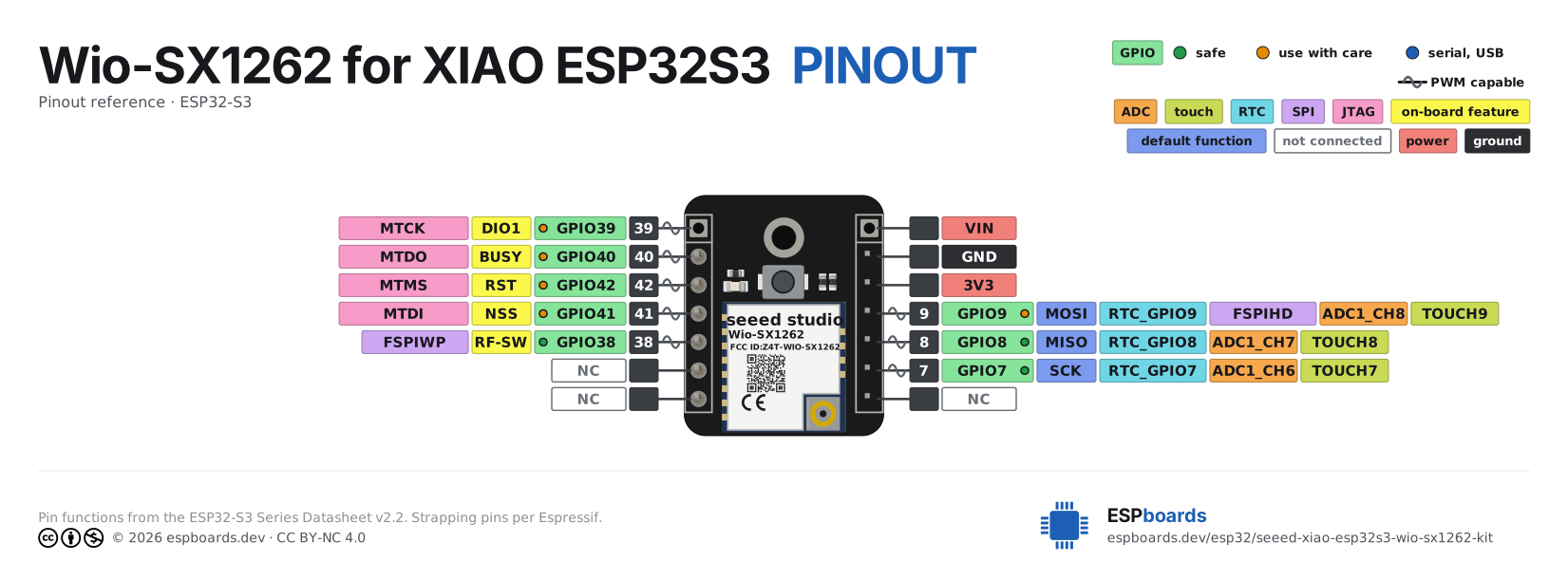
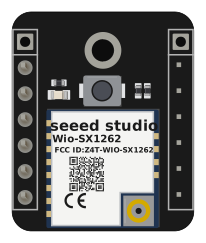
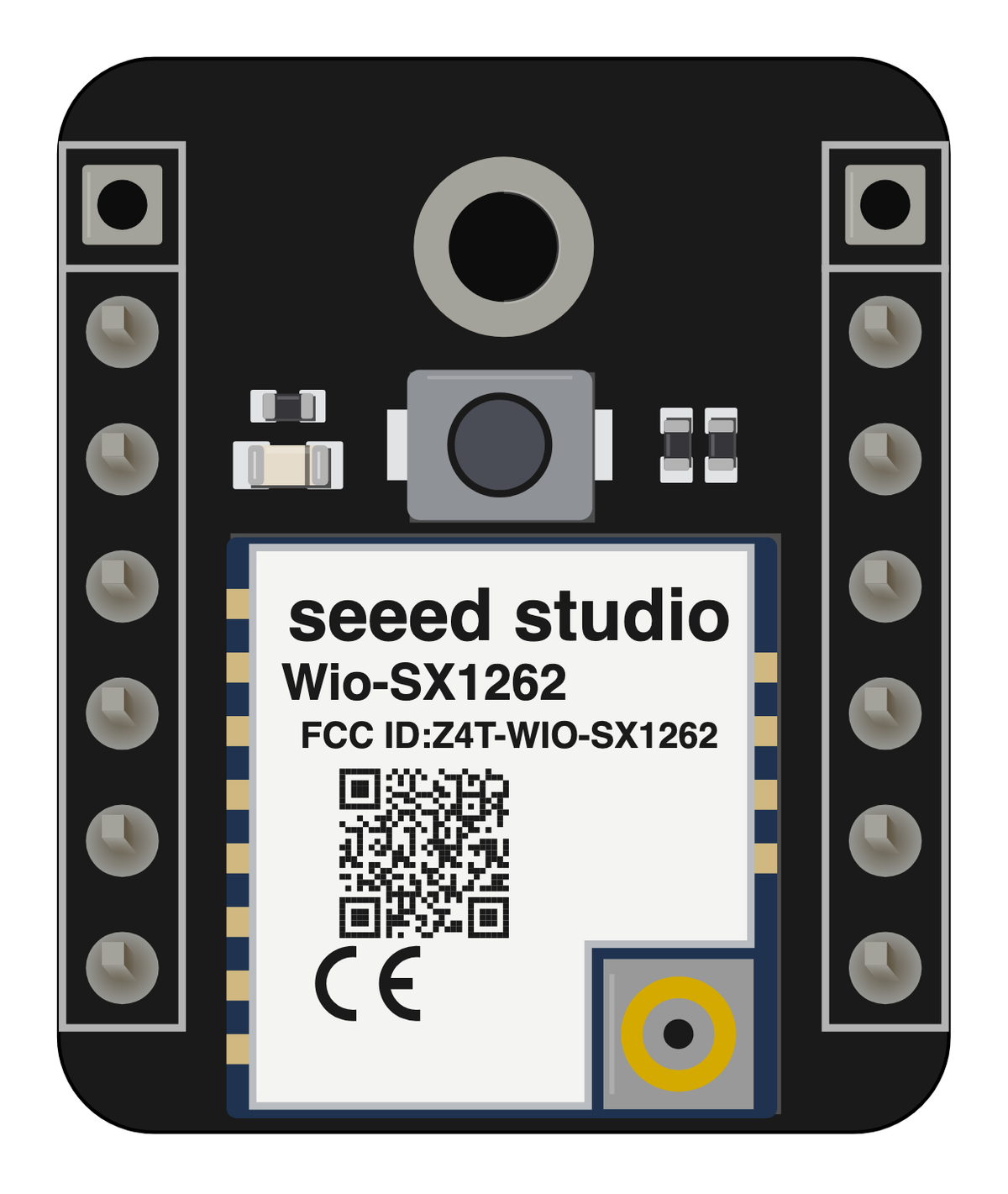
The drawing above is the Wio-SX1262 board, which sits on top of the XIAO in this kit. The XIAO's own pins (D0-D10, 5V, GND, 3V3) are in the table below and drawn on the XIAO ESP32S3 pinout. Do not solder one pin header through both boards. The Wio board's left row (DIO1, BUSY, RST, NSS, RF-SW) sits directly over the XIAO's D0-D4 but is not connected to them, and a shared header would short the radio's control lines…
The drawing above is the Wio-SX1262 board, which sits on top of the XIAO in this kit. The XIAO's own pins (D0-D10, 5V, GND, 3V3) are in the table below and drawn on the XIAO ESP32S3 pinout.
Do not solder one pin header through both boards. The Wio board's left row (DIO1, BUSY, RST, NSS, RF-SW) sits directly over the XIAO's D0-D4 but is not connected to them, and a shared header would short the radio's control lines (GPIO39, 40, 42, 41, 38) onto GPIO1-5. The right row is safe: VIN, GND, 3V3, MOSI, MISO and SCK are the same nets as the XIAO pins underneath.
The Wio board adds a user button on GPIO21 (10K pull-up, pressed = LOW) and a green LED on GPIO48 (HIGH = on). GPIO21 is also the XIAO's own user LED, so pressing the button lights it.
There are two Wio-SX1262 boards for XIAO. The ESP32S3 version plugs in through a B2B connector, while the nRF52840 version uses through-hole pins, so each one only fits its own XIAO. Check which one you are ordering if you buy the radio module separately.
Downloads
Free for non-commercial use, credit espboards.dev · License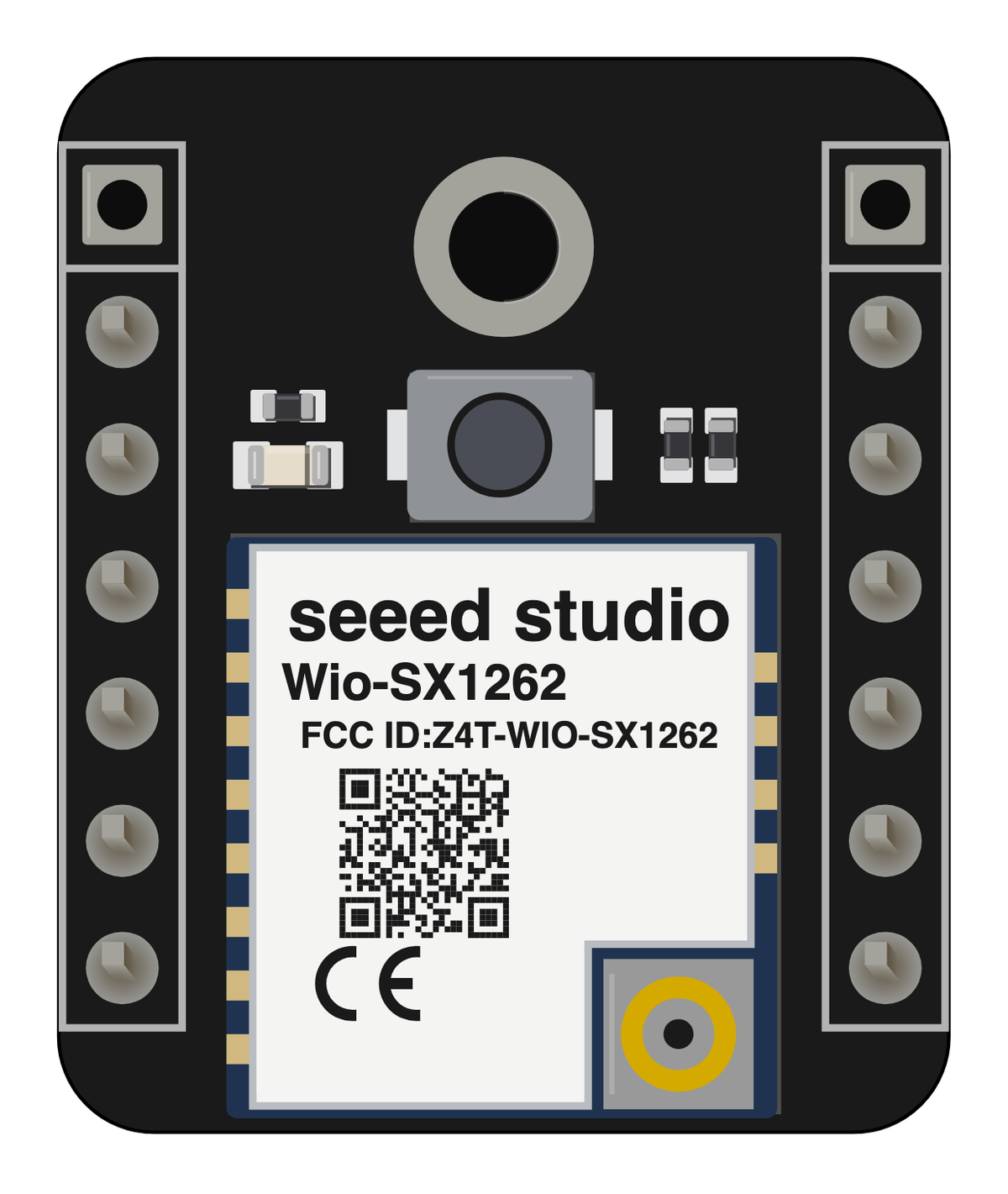
Board illustration
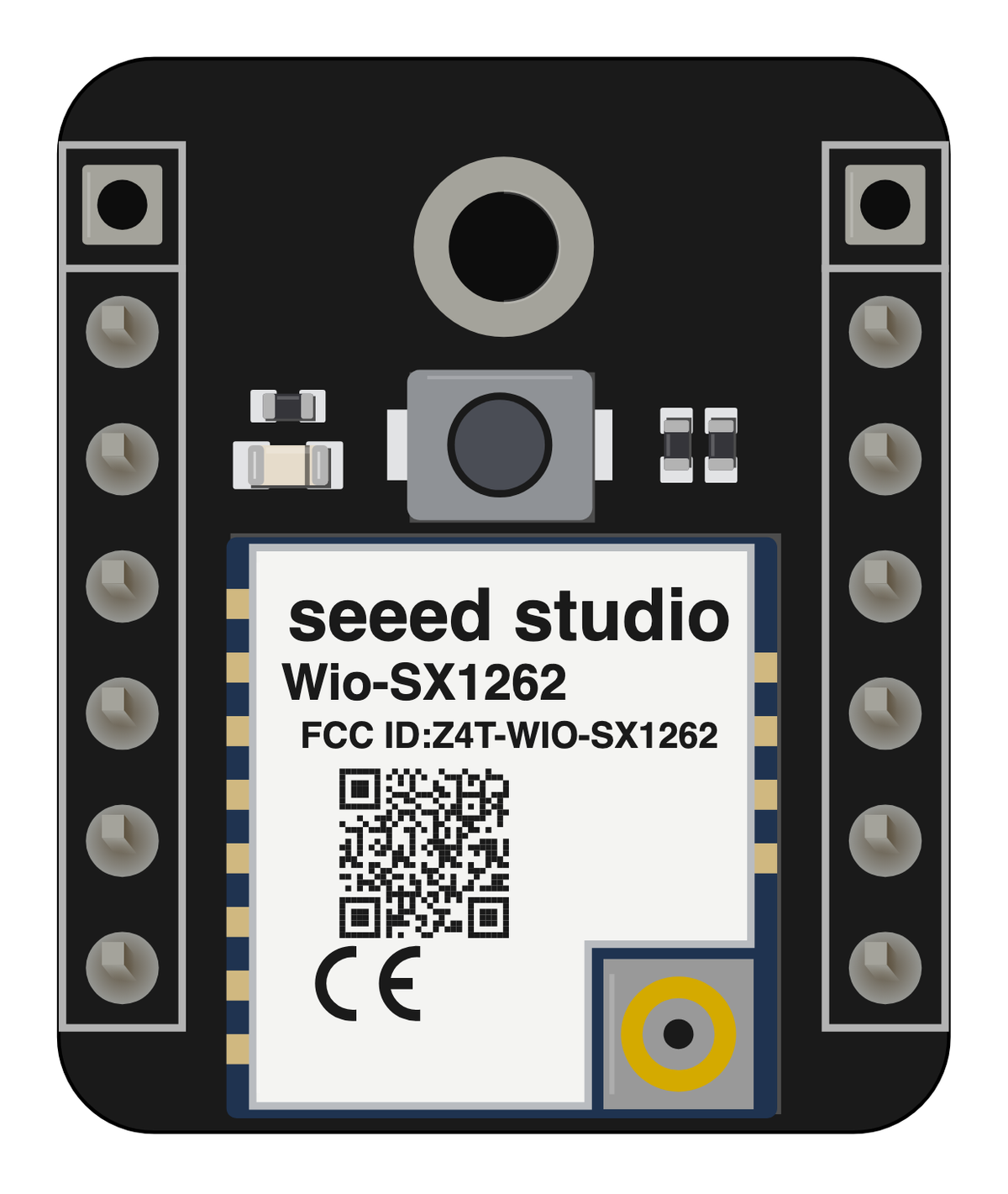
The bare Wio-SX1262 for XIAO ESP32S3 (the kit's top board) board drawn to scale, with no pin labels on it. Made for slide decks, wiring diagrams and project write-ups where a photo is too busy. Take the scalable SVG for print or editing, the high-resolution PNG to drop straight in, or the transparent PNG when you need it with no background behind it.
Pinout diagram
Every pin on both sides of the board with its functions, drawn by ESPboards from the ESP32-S3 Series Datasheet v2.2 - the same sheet shown at the top of this page. The PNG is a high-resolution image for screens, the SVG is vector so it stays sharp at any size, and the PDF is laid out to print on A4 or Letter.
Yours to use, share and adapt for non-commercial work, as long as you credit espboards.dev - the full terms and ready-made credit lines are here.
Specifications
ESP32-S3 · 21 × 17.8 mm · vs other ESP32 chips →Dimensions
About this board
At 21 × 17.8 mm it's among the smallest boards in the whole ESP32 family.
At its core is the ESP32-S3 - a dual-core Xtensa with vector extensions suited to AI workloads.
Expect to pay about $10.90 - less than the ~$29 most ESP32-S3 boards go for.
The small footprint costs pins: 11 GPIO are broken out, versus 22 or so on a full-size board.
Onboard you'll find 8MB PSRAM, LoRa (SX1262), battery charging, status LEDs (User, Charge) and Reset/Boot/User buttons.
It flashes over native USB - no serial-converter driver needed, which isn't a given among ESP32-S3 boards.
- LoRa 862-930MHz (Semtech SX1262)
- Battery charging current 100mA
- Operating temperature -40 to 65 C
- The FPC LoRa antenna in the kit is for testing only, per Seeed - buy a proper antenna for reliable range
Where to buy
prices are typical street pricesResources
Similar boards

